Tuesday, February 13, 2018

On Love (or, Best Git Yer Mushin' Shoes)

World's full of pretty girls. Once Ellie and I officially began dating, I started training myself into a habit which I still maintain: every time I see an attractive young lady, I say to myself, "No one's as pretty as Ellie." This is partly because it's true. (No offense to my female readers.) But also, it's for the same reason that we say the Apostle's Creed every week even though we already believe itto keep it ingrained on the very forefront of our minds, to keep it reflexive. The same reason that even (for example) the best soccer players in the world keep practicing basic kicks all the time even though they're already the best: because that is precisely what makes them the best. The Christian apologist Von HΓΌgel once said, "I kiss my son not only because I love him but in order that I may love him." The more I act as though I love Ellen, the more I love her. It's the one and only good thing about the tribulation of hyperemesis gravidarum: it gives me ample opportunity to practice loving my beloved.

Love means to will the good of another. Like all things that are deeply true, it's complicated and painful. I love my daughter, and that's going to mean spanking her if she keeps trying to stick her fingers in the outlet. There are levels of good. At what point does true love mean letting Sonya Madga make a mistake and learn a hurtful (agonizing? crippling?) lesson? As with any big decision, I can't know that without praying to the Holy Spirit and seeking the counsel of people I respect; but I also can't pile my own culpability on Him or them. I'll make decisions, be wrong, and hurt the treasure of my heart sometimes. What's the alternative?

We met the Pope this one time. No big deal or nothin'. You hang around that town for a bit and it really comes home to you that il Papa means "the Pope" but also, you knowthe Papa. My dad made mistakes, and I'll make mistakes. The Pope makes mistakes. (Except when he speaks ex cathedra, of course.) He's still our Papa. If he didn't care about us, he could just hang out in the Papal Palace and let us figure things out on our own, just as I could let Sonya play around with the outlets. Maybe I spanked her too hard. Maybe the outlets are some kind of new-fangled LED outlets that can no longer shock you, and I spanked her for no reason at all. Will she still grow up knowing I love her and I'm doing the best I can? Dear God, I hope so.


You, reader. I will your good. Most likely (let's be honest), you're one of my Facebook friends, and we already know and love each other in the world outside the Internet. But who knows! You could be reading this in 3000 A.D. as you crouch in a neon corridor exchanging photon-rifle fire with space heathens who insist that it's 3000 C.E. like the idiot heathens that they are. That's okay, I still will your good. And (umsorry) theirs too. Stupid people think it's impossible to love your neighbor because we can't always feel nice fuzzy feelings towards everyone. Nooooo shit. That's not what love means. It turns out that God's not an idiot. He doesn't command us to be continuously fuzzy, but to will the good of all. And that quite often means sacrificing ourselves; but not always. After all, if the space heathens were suddenly to perceive the truth of Love, then they would stop shooting at you and you guys could all get together and party. But more likely, they'll torture you to death and then you and I can get together in Purgatory and pray for their souls.

Does that sound bleak? It probably sounds bleak. I'm waiting for my daughter and drinking bourbon, and I'm not inclined to soften things. I surely do wish that Sonya Rose could enter a world without hate. But if she did. . . would she ever grow up? Is it better that she remain a child for eternity? Maybe if I truly love her, I need to let her face the Evil, fight the Evil, fail and fall and get back up. God is Love, and wills our good. And boy, does He let us suffer. Willing my daughter's good, shall no doubt mean watching her pass through some hard, deep waters. But here's what Ellie has written on our wall as we wait for Madga Rosa to finally emerge from the womb:

"When you pass through the waters, I will be with you . . . When you walk through the fires, you will not be burned . . . For you are precious and honored in my sight. . .

And I love you" (Isaiah 43).

Sunday, February 4, 2018

On Sex and Violence (or, We Have Powerful Friends)

So there's this movie called Return of the Jedi. Had a cult following back in the day, you may have heard of it. In the first act, Princess Leia gets captured by Jabba the Hutt and forced to wear this crazy space bikini which, for half my generation, first introduced us to the notion that girls weren't always big dumb-heads but could sometimes be intensely interesting in ways that we didn't quite understand. Then a bit later, she shorts out the lights and strangles him to death.


I was never a little girl, but I imagine that seeing this for the first time would be a pretty empowering experience. Not Luke, not Han, not even Chewie ends up whacking the Hutt, but the skinny princess with the silly buns in her hair. And even better, she kills him with the very chain that he himself put around her neck. You go, girl. (Or whatever they say nowadays.) Thing is. Before that empowering moment could happen, she had to be shoved down into the slime of degradation. You could've had Leia keep the bounty hunter costume and just blow up the palace with her thermal detonator, but it wouldn't have meant anything. The meaning of her ascension is derived from the demeaning that precedes it.

Now the very real and awful danger is, what I just said is absolutely artistically true, but there's also absolutely no way to draw a solid line at where the aesthetic begins to drift away from the ethical. In other words, exactly how much degradation can an artist depict before it becomes titillation? There's no algorithm for it. If life were an equation, we'd none of us be here. Free will is a frigging mess. It has to be. We've discussed before how difficult it is to give a cut-and-dried definition of pornography that objectively separates it from Art. Both undertakings call for nudes, and neither can succeed without challenging boundaries.

When Rhett told Scarlett that, frankly, he didn't give a damn, it was shockingly obscene. But try to think of a single word that could possibly shock an audience these days. Oh wait, here's one: the N-word. Which, come to think of it, Rhett and his contemporaries used as casually as we use the word potatoes. Standards float. If I passed Jesus on the street I'd probably think, looks like a cool guy but he could use a haircut. Good grooming is always good, but societies differ on the specifics of what constitutes it. This is what moral relativism fails to understand: things change on the surface precisely because the truths underneath are eternal. Everyone everywhere has always understood on some level that sex is sacred. And not despite that but because of it, every culture and religion has tried to find some way to make it special, to set it apartin ways unique to each culture. The particulars, the trappings, change radically with place and time; the bedrock is universal.

Same with the portrayal of violence. In the fifties, the hero typically shot a villain once and the guy would grimace and hop off a balcony. By the eighties, Schwarzenegger was throwing a steel pipe through a villain into the boiler behind him and saying "Leddoff somm steeeeam" while the guy stood there bleeding and screaming and letting off steam. (Heh! It's still funny.) But compare it with some of the stuff in the Iliad and it's fairly pedestrian. Why, mathematically, is one of them eternal art and the other one basically exploitative (though awesome) garbage? There is literally an entire branch of Philosophy going back 4,000 years that has not yet conclusively settled that question.

T. S. Eliot in his great, strange "Choruses from the Rock" speaks darkly of modern heathens who spend their lives "dreaming of systems so perfect that no one will need to be good." Ain't no such. Because we're fallen, there must be systems to guide us; but they can never replace the necessity, and the responsibility, of individual human judgment. Was the Leia bikini exploitative? Mmmaybe. Was it necessary to the development of both her character and Jabba's? Mmmaybe. My real contention is simply that an intelligent case can be made in either direction, and infinite nothingness comes of contemptuously dismissing the enemy argument. It's worth talking about. Let's talk it through.

Also, Boba Fett died in the Sarlaac Pit.

Tuesday, January 30, 2018

On Anxiety (or, You Just Need To Relax!!!)

First, an admission. Until a couple of years ago, I was the sort of person who rolled his eyes at the thought of taking medication. My dad has extremely high anxiety, and his father before him had a nervous breakdown when Dad was in high school. I dunno if that's learned or genetic or both, but it sure as hellfire and damnation got passed on to me. Back in my wandering days, it manifested mostly as depression since I had no responsibilities about which to be anxious; but once I met Ellie and began trying to be an adult, I suddenly had other people to worry about and could never again fall back on "Well, I know a nice unlocked broom closet in a motel near here" if the rent money got too tight. It makes one fret, you know. On the other hand, it was also Ellie who finally talked me into investigating the medical option. Took me about two years to find one that really works; but boy, does it make a difference. Is it a crutch for my weakness? Sure, I guess you could say that. But at the end of the day, I'd rather admit the flaw and use the crutch than spend my marriage seething with stress and suddenly exploding until I'm more a source of fear than comfort to my wife and daughter.

Here's how I see the logistics. Your soul makes the choices that shape who you are, and those supernatural choices become electrochemical reactions in your brain: matter moved by spirit. (This is tangential, but just digest the fact that every single thought you've ever had is technically a miracle.) Your brain, however, is imperfect. No offense. Some imperfections are your own doing, like getting yourself drunk; some are beyond your control, like tumors or dementia; and some are a little of both, like a vice nurtured to addiction. But they all disfigure the shape cast upon the world by the light shining inside of you. For me, anxiety puts fangs on the face of my soul, and I don't like 'em. I can't speak for everyone, but I have limits to what I can accomplish by sheer will. Sometimes I need help. And also, I was being disingenuous just now. I can speak for everyone: sometimes, everyone needs help. Ultimately, being a Christian means accepting it even more than giving it.

St. Paul exhorts us to have no anxiety at all (Philippians 4:6). Great advice. Real helpful. Right up there with "Be ye therefore perfect, as your Heavenly Father is perfect" (Matthew 5:48). Thanks, Lord! No problem at all. Luckily, it turns out that God is smart. These aren't one-time commands like go do the dishes; they encompass the work of a lifetime. We have Penance because He's well aware that we're not going to be perfect for long stretches at a time. Nor will we always possess the peace of God which passeth understandingor at least, we won't always "feel" it, in the emotional sense. (One of the most helpful things my old pastor Fr. LaValley ever said to me was that sometimes the Holy Spirit does His best work when you can't feel His presence at all.) Furthermoreif you believe in this sort of thinganxiety is a favorite tool of the Enemy, and is said to be a possible sign of demonic oppression. Makes sense; God speaks in music and silence, Satan in noise. But every sandbag he throws on our shoulders will just make us stronger when we get to the peak of Mount Purgatory and we finally stand unbowed. What matters for now is the prayer, and the work.

I thought to write this quick little post because a few days ago I had a very brief moment of falling victim to one of the classic blunders. The most famous, of course, is never get involved in a land war in Asia. But here's another one: never, ever decide that you suddenly feel better and no longer need your meds. It's a saddening and frustrating thing to have a friend on antidepressants who's finally starting to experience real solace and therefore goes off the very thing that's making it possible, only to find them curled up on the closet floor two days later. I've seen it, and I'm thankful it stayed in my memory. I do feel better, a lot better, these last couple of months. But that don't mean it's time to quit taking medicine, it means the damn stuff is working and it's time to keep taking it. When I got my first pair of glasses, I didn't say, "Hey, I can see! I guess I don't need these glasses anymore!" Believe me, I hope I don't need to be on meds forever. But no matter how hard I try, I can't will my way to 20/20 vision. We prayed for the relief of my anxiety, and behold, we found something that relieves it. If it doesn't come with wings and a thunderclap, can it still be the answer to a prayer? I rather think so. And I will never again roll my bespectacled eyes at the medication that helps me take care of my family.


Tuesday, January 23, 2018

On Drinking (or, Dringin'? Di' sumb'dy say dringin'?!)

I didn’t drink till I was twenty. Not for any moral reason; I just never felt like it. Liked my Dr. Pepper and my Combos. Still do. But then came the day my friend Domingo and I were hanging around his dorm room playing Mario Kart (more accurately, he played and I commentated), and this kid Neil from up the hall came by and asked if we could hide his bottle of Smirnoff. Seems he’d gotten wind that the RA was doing an inspection, and he somehow had the notion that Domingo was 21. A false notion—me and D. are the same age to within a couple of days—but we didn’t bother correcting him, and fortunately it turned out that he was wrong about the inspection too. There happened to be a bottle of OJ in the fridge, and I had my first screwdriver that night. Also my fourth. Thus was born the age of Mario Kart DUI, and half a lifetime of alcohol appreciation on my part.

There’s a story about my wonderful sister-in-law Sarah at the age of one or two, clumping up to the dinner table in her diapers and quite unselfconsciously stealing and chugging a houseguest’s half-full glass of beer. Now Sarah, having been raised around the stuff, is a young lady who will grow up understanding how to drink. My dad, on the other hand, is a borderline teetotaler; and if no one teaches you proper drinking, then you must sail the foamy suds of autodidacticism with all its appurtenant perils. It was years before I began to figure out that the exact moment when you feel like it’s time to start really drinking, is when you should take a break and have some water. It also took me many long pale moons to realize that good whiskey has other purposes besides gulping it down with Pepsi so you can spend the night jigging to the Pogues and seeking out new ways to replace your clothing with kitchenware and furniture. (And for the concerned, I can assure you that in the fullness of time, I indeed outgrew my tendency to wear lampshades on my head.)

My cousin Jes and I moved in together when I was thirty, and our buddy Simeon gave us a bottle of The Glenlivet as a housewarming gift. Jes decided he didn’t care for it, so I set myself the task of learning to enjoy a celebrated Scotch, neat, in a sober and adult manner. I had a small glass every night for, I don’t know, two or three weeks until the bottle was gone, sipping ruminatively and rolling the boggy brine across my tongue; and by the end, I had indeed developed a taste for it. It was also around this time that micro-brewing was becoming a macro-business, so I soon learned to appreciate good beer as well. (I remember visiting Domingo in Alabama once, with a trunk full of Vermont craft beers at a time when Alabamians had a choice between Bud, Miller, and screw yourself. That was a good weekend.) The benefits of an educated palate are—well, the same as any liberal art, the “unnecessary” arts of the free man. I’m still capable of enjoying Pabst (in fact, I’m literally drinking a PBR as I type this), just as I’m still capable of enjoying the Incredible Hulk; but I can also enjoy Veuve Cliquot and Hamlet, and so my cosmos is deeper and more multi-faceted than it was.

My beautiful wife and I just bought a house. I just celebrated my first anniversary at my job. We just got our ignition coils replaced, there’s a fluffy black kitten curled up at our feet, and our baby girl will be here any day. At the age of forty, I’m finally beginning to have a pretty normal and stable existence. But man, there’s a lot of strange years and miles behind me. I remember drinking Boone’s Farm Wine in Tuscaloosa and running out into the streets along with half the town when ’Bama won a big game; Mad Dog 20/20 at a Burger King in Seattle as I composed a travelogue in heroic couplets; Cristal with Ellie on our first married Christmas. I remember drinking Mike’s Hard Lemonade after Jes and I got our black belts at the bonfire; Coors in Iowa before my second real street fight; Guinness on tap at the James Toner Pub in Dublin on our honeymoon. I remember cooking a breakfast of chili and Chinese stir fry in Bushmills Irish whiskey for me and Domingo in my first crap-hole apartment; some weird vanilla vodka with Ren and the boys in Burlington as we hurled each other into the pool; Eagle Rare bourbon after Ellie accidentally won us a tasting at the church auction. Damn near all my best memories revolve around beloved friends and alcohol.

There’s a reason Jesus’ first miracle involved the fellowship of the vine; there’s a reason communal drinking is at the heart of the Blessed Sacrament of the Mass. “Wine maketh glad the heart of man” (Psalm 104:15). You can bet we’ll raise our Sonya to respect the power and poetry of that finest spirit, and also to avoid abusing it. Alcoholism is a grave illness—but abusus non tollit usum, “the abuse of a thing does not take away its proper use.” Every evil is a good thing misused. If we remember the purpose of this lovely gift from God, and use it with restraint and dignity, then it can be one of life’s great joys. Friends, thanks for reading. I raise a glass to you all.


Tuesday, January 16, 2018

On Priestly Celibacy (or, Pictures In The Snow)

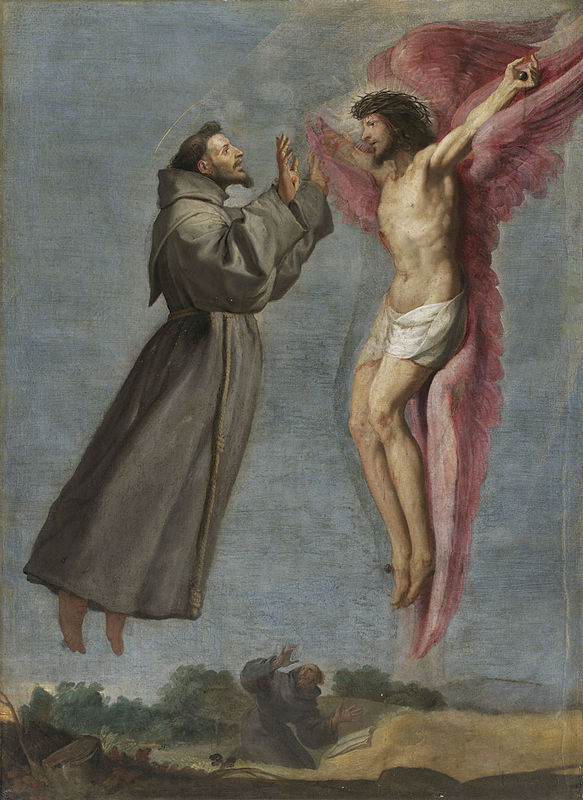
There's a sad and beautiful story about St. Francis of Assisi. He was fasting in the wilderness, alone with the ice which in Flannery O'Connor always means the Holy Spirit, and the Devil came to tempt him, as he does. For Francis, the lure was not a sin but a sacrament: the temptation of Holy Matrimony and Bernardone children of his own. He knew his vocation and he knew his vows, and he didn't leave his fast to seek a spouse. Instead, he drew pictures in the snowone stick figure, and a smaller one. And he cried aloud that these sufficed him for a wife and child.

Secularists are absolutely right to insist that priestly celibacy is wrongbased upon their own wrong premises. It has no place in a world that is dry of the divine. No other sexually reproducing organism deliberately abstains from sexual reproduction, any more than orangutans eat only fish on Friday. In a heavenless cosmos, there can be no saints; and the priestly calling is to spearhead the charge toward sanctity. Like the U.S. Army Rangers, whose motto is "Follow me," the priest, the alter Christus, must call "Come, follow me!" (Matthew 4:19). Only in that context can the strange sacrifice of the presbyterium be understood. But without it, even secular society cannot reproduce.

In his Notes towards the Definition of Culture, T. S. Eliot argues that a culture is "the incarnation (so to speak) of the religion of a people." Now, we can dispute the ethics of Christendom. The average person believes that the Spanish Inquisition, for instance, was responsible for the deaths of more people than were alive in Europe. The average person decries the Crusades, never having heard of the Muslim invasions and the greatest cavalry charge in human history. But for our current purpose, we needn't compare ethics with Eliot's contemporary counter-examples, but only the aesthetic achievements of our respective cultures. Even if the Church had slaughtered as many innocents as the Union or the Reich, or a tenth of a percent as many, she still offers Handel's Messiah to set against Wessel's Nazi anthem. She still brings Michelangelo's Pieta to set against Lenin's tomb. She still holds out the Irish monks who bore the knowledge of the West through the Dark Age, to set against the bonfires of Berlin. Only clerical ignorance, it seems, allows the wisdom of one generation to pass on to the next. This seems particularly relevant now that the plights of Europe and Japan have forced us to invent the term "population implosion." The same secularists who denounce the celibacy of priests have cursed themselves to bear no fruit. Plain worldliness defeats itself.

The teachings of Christ, conversely, have a tendency to conceal enormous practicality beneath their otherworldliness. When He counsels us to take the lowest seat at the banquet, it is of course meant to encourage us in humility and self-sacrificebut it also gives our host the occasion to say, "Friend, go up higher." In the same way, a priest's vow of celibacy carries the great practical benefit of freeing him from the obligations of a natural family, so that he can look upon his whole congregation as a flock of sacred children. But ultimately, that is only a side effect. After all, priests who have been ordained and married in Protestant ministries can receive a dispensation if they convert. The true purpose and significance of the vow lies elsewhere.

There is no remittance of sin without the shedding of blood (Hebrews 9:22, also cf. Leviticus 17:11). St. Francis sought martyrdom among the Muslims to no avail, but became the first recipient of the Stigmata. And those same supernatural wounds afflict every priest who stands on the altar of God, sharing in the single sacrifice of Calvary, upon which they lay their earthly nature as a holocaust. The highest natural vocation for a man is marriage and fatherhood. That is why the priest, who cannot always find the martyrdom of blood, instead offers up his flesh in a harder way, a way that crucifies his merely mortal destiny each day, throughout his life. By his blood, and not otherwise, we partake in the blood that remits our sins forever.

And what recompense does the priest receive? There's another story: one night, the people of Assisi saw the church of the Portiuncula ablaze. They came running up the hill with buckets of water to douse the fire. But inside, they found only St. Francis and St. Clare, sitting calmly, speaking of the love of God. And from their faces came such a radiance that the whole church glowed as if with holy flame.


Also, this. And this.

Tuesday, January 9, 2018

On Omniscience (or, Getting In Over My Head)

My friend Dan is currently working on his doctorate in astrophysics. (He's smart.) He seems to have resigned himself over the years to the fact that whenever he and I are drinking together (e.g. when we're in the same room), sooner or later I start pestering him to explain ultra-complex physics concepts to a guy who's one high school algebra class short of mathematical illiteracy. Despite my handicaps, however, there are one or two elementary concepts that I've managed to wrap my head around. One of them is that in order to learn things about subatomic particles, it's necessary to smash them into other subatomic particles using gigantic machines that are very, very unlikely to create accidental black holes and annihilate the solar system. By bouncing Particle A off Particle B, you can learn B's trajectory, but at the cost of altering its velocityor you can learn its velocity, but at the cost of altering its trajectory. You can never know both at the same time. Werner Heisenberg dubbed this the Uncertainty Principle; and the general idea that the act of studying a thing inevitably changes it, has proven relevant in many fields outside the realm of physics.

As a professional idiot floundering through the eldritch morass of theological conjecture, I can't help wondering whether and how that principle applies to the study of God. Obviously God is eternal and doesn't change; but in studying Himin seeking to know Himwe change our own relationship with Him (hopefully for the better). And because He loves us infinitely, He rejoices when we grow closer to Him and sorrows when we pull away.

Now, to field a potential objection: when we say that the Lord "rejoices," we are using a metaphor from our own terrestrial experience. God doesn't undergo dopamine spikes. He doesn't giggle or grin, He doesn't clap His hands or pump His fists in the air. (Although come to think of it, Jesus is fully Man as well as fully God, so perhaps He does those things after all. But let that pass for now.) Our own experience of joy is rather an echo, a shadow, of the True and Perfect Joy that exists in perpetuity beyond the spheres of time. The joys and sufferings of the Almighty don't constitute "changes" in Him the way they do in us.

But! God, Who exists from all eternity in His ultimate fullness, has always been experiencing, is always experiencing, the daily permutations of my relationship with Him and the attendant joy and sorrow of those permutations, not on a day-to-day basis, but in their single completed wholeness, a four-dimensional diamond or a four-dimensional piece of everlasting trash, depending on my own choices. He doesn't experience those choices and changes in a linear way as I do. But to an infinitesimal degree, that which God is, and "has been" forever and ever, is determined (has always been determined) by the degree to which I manage to accept His overflowing love. The Divine Nature itself, infinitely happy in the Triune Charity, becomes (has eternally become) yet happier if I choose to love Him back. So just as His version of rejoicing is not less but more real than ours, can we not say in a way that His version of being changed by our choices is even more real than anything we know, because it predates the bloody universe?

I can't be sure if this idea is true. I'm not even sure it's coherent. But as Ellie and I enter the tag-end of the third trimester, I continue my bumbling quest to prepare my brain for the questions of the tiny new Toner. One of the hard ones is, how can I have free will if God already knows what I'm going to do? And the answer remains, He knows what you're "going to" do because, to Him, future and past are eternally present and He is watching you do it right now. But that's really hard to put into simple language. Perhaps I'll hold off until Yakko finds a way to explain it.


Tuesday, January 2, 2018

On The Messiah (or, What I Have Written, I Have Written)

Unlike most Catholic bloggers, I'm not inundated with wealth for my literary efforts. As a result, I've been reduced to working for a living, lo these many years. Awhile back I was working at an Ace Hardware store, and a very peculiar thing which, at the time, didn't strike me as peculiar, occurred. I was manning the register, and a fellow came through the line to buy something or other, and I asked if he had his little Ace card for his little Ace discounts, and he said yes and showed me his card and I scanned it, like you do. I don't remember his last name and I obviously wouldn't mention it anyway if I did, but his first name was Chaim, which, because of the l'chaim dance from Fiddler on the Roof, I knew how to pronounce. So I said it and he smiled and said something like, "Well, you're either well-read or you're Jewish." And I smiled back and said, "Well I'm half-Jewish, I'm Catholic." And he paid for his stuff and left. He didn't say another word.

At the time, there was a line of people and I didn't really think anything of it beyond a sort of inchoate, eh, he's prob'ly in a hurry or something. And a bit later, when I looked back on it, I had a dim sense of, hm, I hope I didn't offend him or anything. But it wasn't till quite a bit later, when I read Chaim Potok's My Name Is Asher Lev, that I realized just how not innocuous and jocular my own Ace Hardware Chaim might have found my little remark. If you haven't read it (good book, you should read it), it's about a young Jewish kid in Brooklyn in the '50s who turns out to be an artistic genius; but, conflict-engenderingly, his father is a Hasidic scholar who thinks that having his son not also become a Hasidic scholar would be nothing shy of cataclysmic. This is made all the worse when Asher Lev begins to study the European masters and his father finds him painting scenes of the Crucifixion. He tries to explain that he's only painting it because it's so culturally important; but to his father, "that man" is the wellspring of pogroms and holocausts.

Salvation is from the Jews. As a Catholic, I must and do believe that because, well, it kind of got said by Jesus. We love Jews. Mary's Jewish. But! She's also not Jewish, because she's no longer practicing. She's no longer waiting for the Messiah. Elijah, borne up to Heaven in the raddest possible wayMoses, Abraham, all the prophets and patriarchs freed in the Harrowing of HellSt. Joseph, John the Baptist, Joachim and Anne, all the mighty Jewish saints of old now reveling in Heaven: not Jews. Not anymore. Or rather, not just Jews. Fulfilled Jews, Ascended Jews. Jews who have become what they became Jews in order to be. And if, God willing, I make it to Heaven some day, I too will be an Ascended Jew. I can't be Catholic except through having been Jewish (if only by inheritance). Just as one can't be a black belt without being a brown belt, or hold a Doctorate without holding a Master's, or become a bishop without having been a priest.

Now if I were Jewish and I read the preceding paragraph, I suspect I would feel that some smug schmendrick was patting me on the head, and that I should like to punch him in his teeth. I get that. Thing is. There's a lot of scientific theories out there, on any scientific topic you care to think of. How many people tried to explain gravity before Newton. No one contests that there is one single correct answer to the question, and that everyone else is actually, factually wrong. And yet when it comes to the ultimate reality of the universe, the wellspring of all scientific fact, we tend to metamorphose into amoebae. There's no one single truth, there's no correct philosophy or religion, we must simply squish ourselves into whatever shape will be least offensive to whomever we're talking to.

But there is a Truth. If I didn't think it was Catholicism, I wouldn't be Catholic. If I didn't think my religion was actually, factually correct and that the other ones are all, in varying degrees, wrongI wouldn't be here. I absolutely think the pagans have bits of the truth. I think the stoics and the scientists and Buddhists and Muslims and everyone who seeks the truth, is seeking Christ and has therefore to some extent found Him. I think the Jews are the closest of all to the fullness of truth. But the Truth has already come to them. They aren't quite ready to see Him yet, and that's honestly okay with me because the Conversion of the Jews is one of the signs of the End Times. When that comes, the Messiah debate is over. But some vast Good Friday awaits the Earth before that second Easter. For now: